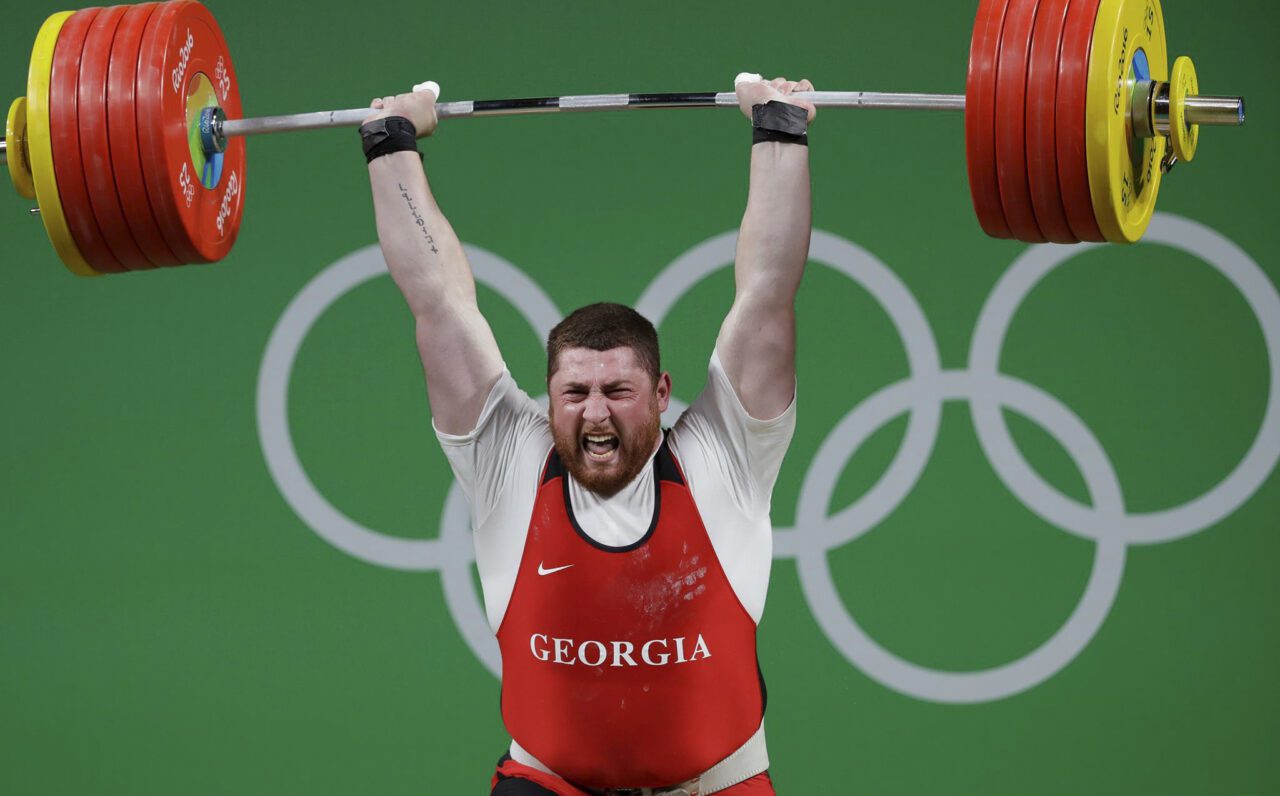
What can we learn from Olympic weightlifting champion, Lasha Talakhadze?
Key points
How strong is Lasha Talakhadze?
Lasha Talakhadze, for those who do not know, is a Georgian Olympic Weightlifter. He will go down as the best weightlifter to have ever lived. He has taken the snatch world record to places it has never been before, and soon to follow is the clean and jerk. Oh, and he has the total record as well. Currently, the four highest totals ever.
What is more is, he does not seem to be anywhere near his ceiling. Arguably, he is inching them up by 1kg to receive multiple pay days. There is not a single person that doubts he can reach new heights still in both lifts whilst also achieving what many considered impossible, the 500kg total.
There are many videos detailing training sessions of his and here are three lessons I have learnt from dissecting his process.
1. Warm up with weaknesses in mind
What does Lasha do?
When Lasha warms up for the snatch, his coach has his perform muscle snatches beforehand. This is not necessarily a weakness for Lasha but more a lift that transfers nicely to the full lift for him. Arguably, it also potentiates him for the full snatch, but it most certainly seems that it is a predictor lift for him, hence its inclusion.
What can we learn from Lasha?
When you are warming up for the Olympic lifts, or any lift for that matter, you should look to find ways of potentiating performance &/or fix an underlying weakness.
I have done this recently with a strongman who looked like he was cleaning in quicksand it was so slow. I actually think he gathered dust on the way up!
With this strongman I simply incorporated power cleans from different positions in his warmup. He would perform two repetitions from the hang, one at mid-thigh and one at the top of the patella. It was not a case of maxing out or even progressive overload with increased weight. Progressive overload would have happened with using the same weight and increasing speed of the clean. Now at his top weights he can clean more and it’s leading to new personal bests for him.
The best thing is it does not even count as extra volume, as the athlete needed to warm up past these weights anyway to get to his work weights. It fixes a problem &/or improves performance whilst not interfering with fatigue. Now that is serious return on investment.
2. Technique consistency is key
What does Lasha do?
Firstly, Lasha treats every weight with respect. He has the same procedure or routine each and every time he attempts a lift. Whether it be in training or a World Record on the platform.
This routine breeds success. There is a study on weightlifters and how long they spend on the platform correlating to success of lifts. Spend too long and you are likely over thinking or maybe you end up over aroused/amped up leading to lower rates of success.
Secondly, Lasha displays minimal inefficiency in his lifts. You will see other lifters go for a walkabout on the platform. Not Lasha. He rarely takes even a step to help counterbalance any technical issues with a lift. This something every lifter should strive for. Every lift you complete should look identical to the last, bar maybe speed/velocity of the movement.
What can we learn from Lasha?
When you squat, walk out with the same two steps. When you perform any floor to overhead movement, ensure your feet end in the same spot you started. Treat your warmup sets the same way.
Too many sandbag their warmup sets instead of paying attention to how they feel and perfecting technique. It is a missed opportunity every time you train otherwise.
3. The Squat is an assistance lift
What does Lasha do?
Lasha is a perfect example of prioritising bar speed/velocity over maximal efforts to transfer optimally to his sport. Mart Siem, another elite level weightlifter is known to squat upwards of 350kg and all the way to 400kg. Rarely will you see Lasha go this heavy, and the upturn is that his bar velocity is high.
What can we learn from Lasha?
Squatting for speed-strength makes sense as Olympic Weightlifting is determined more by this strength quality than strength-speed. Strength-speed is slow, it is typically referred to as a grinding repetition where the concentric phase is slower than the eccentric, typically around 0.4m/s or slower.
The only place you might see strength-speed within weightlifting is the transition from the bottom of the clean into the front squat. This is not ideal at all, as it adds to fatigue. It is why I get wound up when people say, ‘it looked easy’ when referring to Olympic lifts. Of course it looked easy, it is a speed lift, there’s no grind you imbecile!
Lasha does not waste any extra energy trying to prove something on YouTube with his squatting strength. He maximises his performance by focusing more on speed as his maximal strength levels do not need to be improved. Lasha’s ego is left at the door and he seems 100% committed to the process.
Conclusion
There are many more points I could write, but I wanted to narrow your focus to these three as they are absolute game-changers, especially in strength sports.
They are only game-changers though if acted upon. Do not be one of those people that has all the books but completes zero action points from them. Action has a 100% return on investment, especially if you act immediately.
Article written by: Tom Hibbert
Published on: 15/4/2021
2 comments
Inge Kohansson
April 16, 2021 at 12:13 pm
Bra skrivet Tom!
Tom Hibbert
April 16, 2021 at 12:59 pm
Tack!