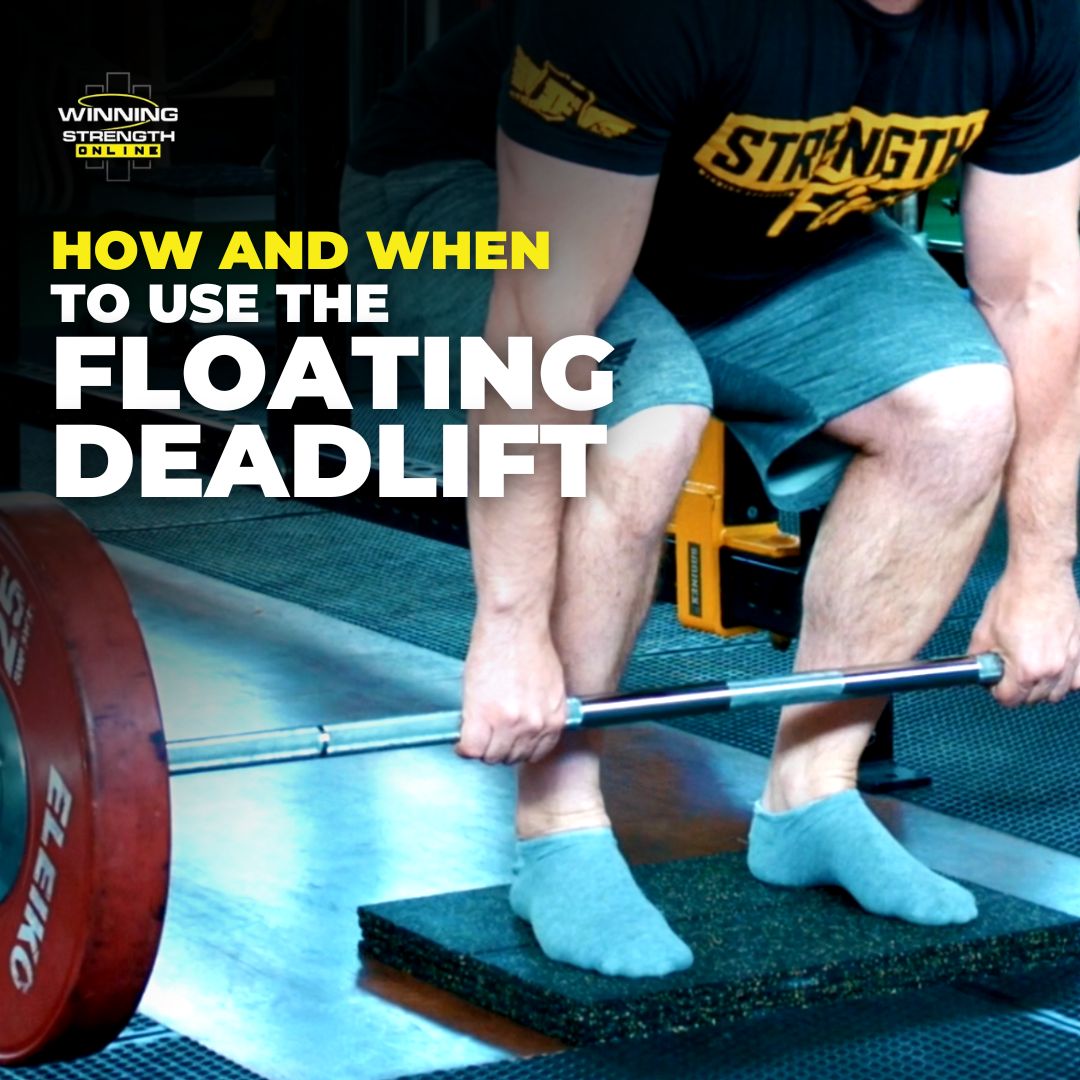
How to execute the floating deadlift
The floating deadlift is far from a magic trick, but it is certainly a useful tool to help add kilos/pounds to your deadlift! Whether you are a powerlifter, strongman, or general athlete the floating deadlift is a valuable technique you should know how to use.
Set up a standard barbell but find something you can stand on, like some mats or blocks measuring 2-4”. This will mean you will deadlift from a deficit. You will deadlift through a longer range than normal due to your feet being higher than the floor.
Then you deadlift the first repetition from the deficit but on the eccentric, you stop just short of lowering all the way to the floor. This is where the floating element comes in. You stop at the range you would be if you were performing a normal range deadlift. So, the barbell will reach around low to mid shin which is where you take a pause.
Not having the floor to take the weight will keep your body under tension continuously. This improves your ability to create tension from the dead stop variation and to recruit the proper positioning. If your postural strength in the bottom position is improved this will always lead to bigger deadlift numbers!
How to program the floating deadlift
I recommend the pause is anything from 2-8 seconds but ensure you correlate the length of the pause with the number of repetitions you perform. Don’t try and perform 8 reps with an 8 second pause each repetition as the time under tension for the set is simply too long.
I would utilise the floating deadlift as an assistance movement to support the deadlift. I wouldn’t use it with the intention of going as heavy as possible. With this in mind it’s best placed immediately after the heavy/neural deadlift work or on the second lower body day of the week.
Performing it after your heavy deadlifts will give the added bonus of a potentiation effect. Let’s say you’ve just executed 3 sets of 3 reps at 250kg. For the floating deadlift you then might perform 2 sets of 3 at 170kg. The 170kg will feel even lighter than usual as your nervous system is prepared to lift 250kg!
This is great because you will either be able to lift more weight than if you performed it as a standalone &/or the bar speed will be higher. Teaching your nervous system to move heavy weights fast is key to enhancing levels of maximal strength.
Your second program option would consist of performing it as a standalone on the second lower body day. I would urge caution on the intensity selected. Although the variation will lead to lower intensities anyway, I find trying to deadlift too heavy too often will affect the lift itself and any progress you’re trying to make in your other movements.
Are you ready to take your strength and performance levels to new heights? I’m taking on online clients at Winning Strength Online, as well as in-person clients at our HQ, Winning Strength Southampton. Get in touch to get started!