The squat may seem like a simple exercise, however, you’d be wrong to underestimate the power of mastering this movement. As a compound movement, it engages a massive number of muscle groups in the lower body and your midsection.
It’s essential to get this bad boy right so you can avoid injury during everyday activities – remember when your mate put their back out picking up that heavy box off the floor? This simple exercise strengthens and stabilises your core, not just your legs!
To truly master the squat, you need more than just brute strength – here are my 5 essential tips you should incorporate to boost your squat performance.
Improve Your Ankle Mobility
Train Knee & Hip Dominant Squats
Strengthen Your Quads
Squat More to Squat More!
Experiment With Tempos
Ready to Improve Your Squat Game?

Children have a natural ability to squat deep, as they tend to be more flexible!
Improve Ankle Mobility
The most common limitation in squat performance that I come across when coaching is poor ankle mobility. After years of assessing athletes, I can confidently say that those with the best ankle mobility scores have the best squat form. Good squatting form with efficient mechanics leads to easier gains and faster progression.
While you’ve probably seen the classic “knee-to-wall” drill recommended by poorly educated coaches and physios, I can safely say that this is as useful as farting into a hurricane and expecting it to stop! While it’s a useful assessment to gauge ankle mobility, it’s not enough to improve it.
The best course of action is to swap this for weighted stretches to actively challenge and improve your flexibility – the ankle joint is very stubborn and responds better to this protocol. If you’re not achieving results, then try to traction the talus whilst performing the weighted stretches.
Once you’ve noticed an improved range of motion, go and train your squat – applying it under load will cement those gains into your squat pattern.
If you’re struggling with your ankle mobility, check out our video on Weighted Stretches to Improve Ankle Mobility for a step-by-step visual guide!
Train Knee & Hip Dominant Squats
I usually teach two different ways to squat, and you want to be balanced in both techniques. Your natural squat likely favours either a knee-dominant (quad-focused) or hip-dominant (posterior-chain-focused) technique, and while it’s natural to gravitate towards your stronger variation, avoiding the weaker version will lead to imbalances and limitations in progress.
The knee-dominant variation you’ll see performed by Olympic Weightlifters, and the hip-dominant you’ll see performed by powerlifters, both with heavy weights.
To address this strength discrepancy, I’d recommend dedicating a short phase at the start of your training block to your weaker squat style. Perform it multiple times a week for 2 weeks – this works as your recoverability will be higher for an exercise you’re weak at.
For hip-dominant squat improvements prioritise movements like low-bar squats or good mornings, and knee-dominant weakness should incorporate high-bar squats or front squats.
Tip: If you want to fine-tune your knee-dominant squats, check out our blog, 10 Truths About the Front Squat before adding a new exercise into your routine!
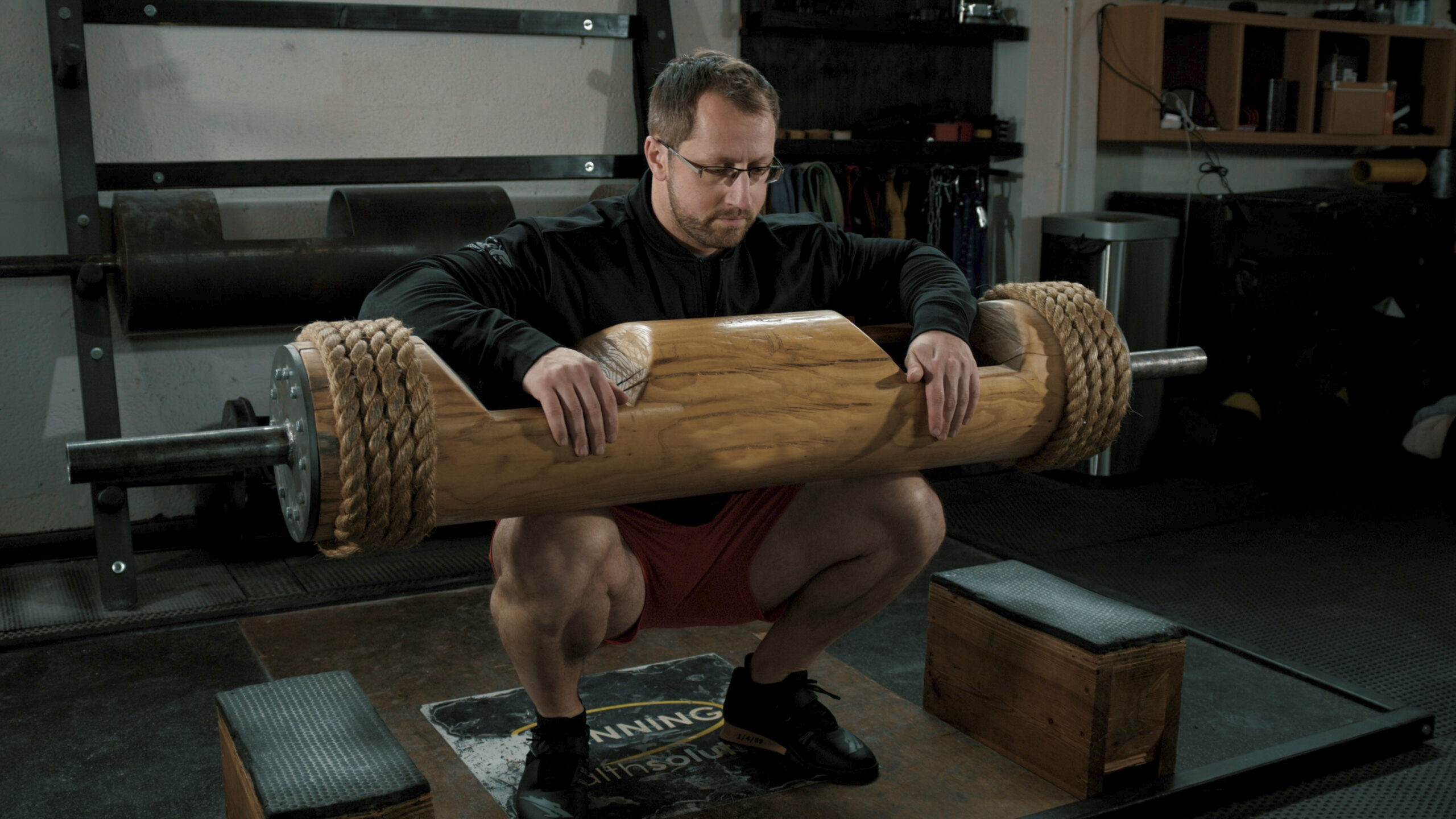
Strong form is essential for performing other movements that involve a squat, like Tom’s log squat shown here.
Strengthen Your Quads
Ever seen someone’s hips kick back out of the bottom of their squat? Or perhaps your hips shoot up out of the hole when squatting – this often indicates weak quads, with the body compensating by relying on the stronger posterior chain and adapting to the challenge of getting out of the bottom position. The result? A squat that looks more like a good morning!
The solution? Add barbell hack squats into your accessory training. To perform this, you’ll need to elevate your heels by 4-6 inches to increase quad recruitment and achieve the deepest range for your knee angle. ZERO leaning forwards are allowed – you need to try and focus on maintaining an upright position, even if that means lowering the weight.
It’s a humbling exercise, even the lightest weight can make grown men scream! Perform 2-3 sets of 8-12 reps with a controlled eccentric tempo (eg. 4010) after your heavy squats and watch your quads and squat numbers grow rapidly.
Want a demo? Watch this quick Barbell Hack Squat Tutorial to perfect your technique.
Squat More to Squat More!
The quickest way to improve your squat is simple: squat more often. The squat is a skill-based exercise, like any other movement, so you’ll improve efficiency, technique, strength and gains by doing it more regularly. It also responds well to volume training because you can recover fairly quickly from it.
I recommend starting by adding just one extra squat per week to your training schedule – if you squat twice currently, bump it up to three times. A gradual increase prevents you from overtraining while still giving you noticeable results. You’ll also decrease your chances of getting bored of squatting every single session, and keep it up for the long run. Why squat six times a week when you’re going to see appreciable gains three times? Be functionally lazy!
If you want to make some serious gains, take a look at our blog about the Norwegian Squat Method, and discover a new way to program your squats that will maximise gains.
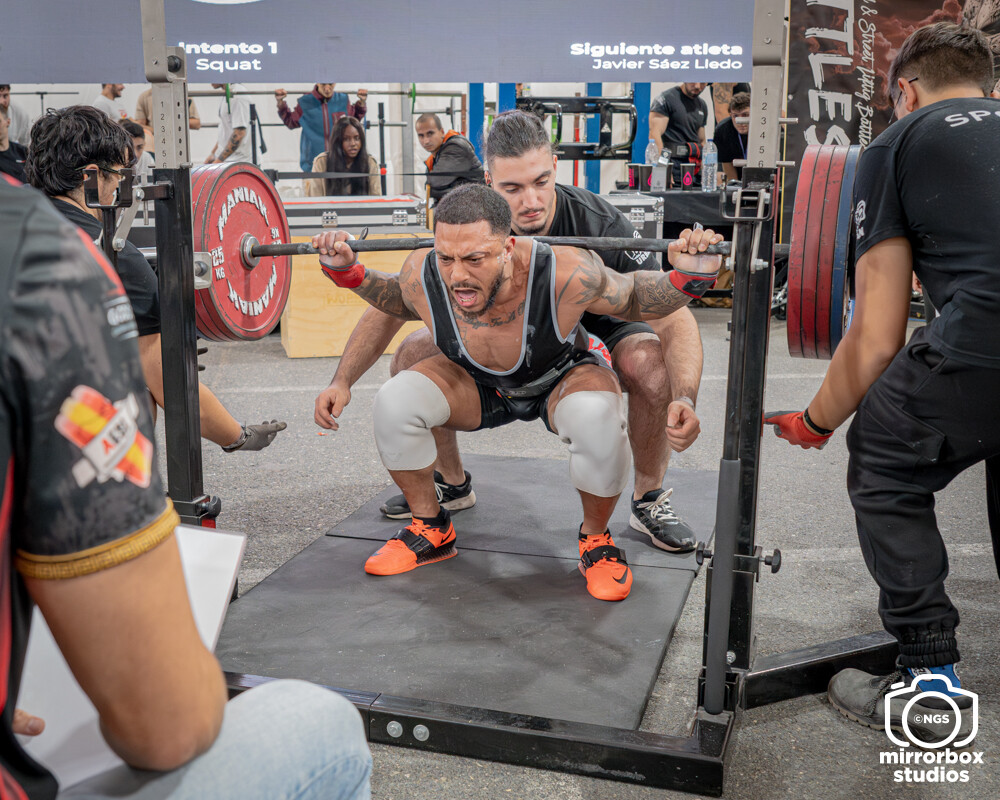
Heavy back squat performed by Owen Gayle, one of our coaches here at Winning Strength Southampton.
Experiment with Tempos
Tempo training is one of the most underutilised tools for improving your squat performance. Adjusting the tempo of your lifts can help you develop better control, address weak points, and build strength across the full ROM. A research study conducted by the Soviets on their weightlifters found that those who squatted more with varied tempos achieved better squat performance, mastering the execution of the movement.
Here are some effective tempo variations to try:
Pause Squats
Hold at the bottom position of your squat for 1-6 seconds to increase stability
5050 Tempo
Control the descent and ascent of your squat, moving down over 5 seconds and then back up in 5 seconds
10-Second Eccentrics
Prolong the lowering phase to build some serious strength by emphasising the muscle-lengthening part of the squat.
Incorporate different tempos throughout the week if you’re squatting multiple times or across different phases of your program. For instance, you might perform paused squats on Mondays and eccentrics on Thursdays. Variety is the spice of life, and by keeping your body guessing you’ll avoid plateaus and watch your squat numbers skyrocket.
Ready to Improve Your Squat Game?
Improving your squat doesn’t have to be complicated, but carrying on as you are if you’re not making progress and have issues to address won’t get you to where you want to be! Consistent efforts and strategic planning of your program will pay off in the long run – and that’s what we’re here for!
If you’d benefit from some hands-on guidance, join us for our free squat workshop in Southampton on Saturday 25th January 2025.
Whether you’re struggling with mobility, strength or technique, this workshop will help you master the movement and achieve your strongest squat yet.