“A chain is only as strong as its weakest link.”
This quote has been repeated by strength coaches and my legendary mentor Charles Poliquin for years, reminding us of the importance of addressing weaknesses when squatting and lifting heavy weights. Louie Simmons is also a huge advocate for this, saying “There’s no point getting strong in the wrong exercise.”
When it comes to strength training, the quality of each exercise is a sum of all your parts, so by strengthening all your parts your whole body will benefit – and so will the main lift you’re focussed on. If your progress has still plateaued then it’s likely that some weak links need attention.
With squat training, the squat is the whole, and the accessory lifts are the parts. By improving your accessory lifts you can build bigger, stronger competitive squats.
The law of accommodation states that “When something is repeated regularly, the body will adapt to this over time”, meaning that the repetition and habituation of the accessories to the exercise you’re doing should, in theory, mean your heavy squats become easier whether you’re doing back squats or front squats.
Read on to discover my favourite accessory lifts for enhancing your squat.
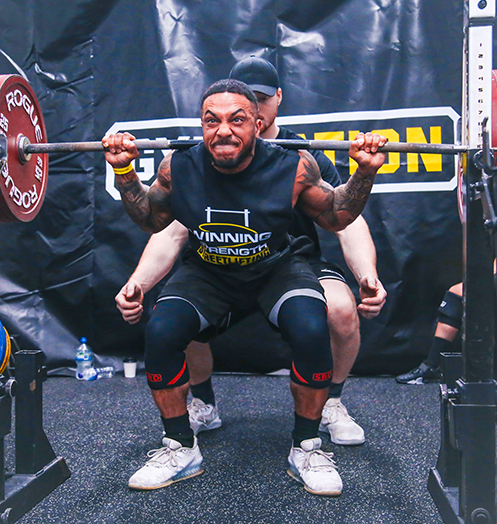
Heavy back squat performed by Owen Gayle, one of our coaches here at Winning Strength Southampton.
Double-barrel barbell hack squat
I’ve endorsed the classic barbell hack squat on many occasions, but there’s another trick you can add to it to take it to the next level – the double-barrel repetition type! For every rep, include an extra quarter movement at the bottom and top of the range.
This technique further stimulates the vastus medialis, which is the most active at the top and bottom of the movement. This muscle is a key player when it comes to stabilising the knee during squats, and by strengthening this muscle you’ll notice fantastic results and increased squat poundages.
Pro tip:
It’s a humbling exercise for most people as they aren’t used to recruiting the end-range position when their knees have travelled past their toes. I recommend keeping the weight light enough to maintain an upright position and avoid form breakdown.
1 & ¼ Split squats
Split squats can be considered a “semi-unilateral” variation of squats, and is a movement that addresses bilateral imbalances and some mobility issues. The majority of the work will be completed by the working leg however it is usually necessary to use your trail leg to help stabilise you.
A ratio of 90% front leg to 10% trail leg activation is ideal – it’s not fully unilateral like a pistol squat would be. Adding the 1 & ¼ element targets the stretched position of the hip flexors which can increase glute recruitment and alleviate any lower back discomfort you may experience.
Generally, the straighter the back leg, the better the stimulus for the front leg, however, this is dependent on your mobility.
Why it works:
The improvement to your mobility and single-leg focus carries over directly to better stability and correct alignment in your squat.
Heavy supports
Feeling intimidated by heavier loads? Incorporating heavy supports into your programme helps desensitise you to supra-maximal weights. If you un-rack a squat and immediately think, “Well fu*k me, this is heavy!” you’re doomed before you even start – you want to walk that bar out with big dick energy!
You can place heavy supports either on your front or back, depending on the squat variation you’re trying to improve – the goal is to get you used to the weight, build confidence and prime your nervous system for heavy squats.
Here’s how you can do this:
- After your regular squat sets, add 2 sets of 5-10 second holds at 10-20% above your max.
- Use this time to practise bracing and perfecting your setup under load.
You also then only need to put an additional plate onto each side of the bar for each set, making your workout more efficient and controlled.
Take a look at our YouTube video for more guidance on how to perform the heavy support in a front squat.
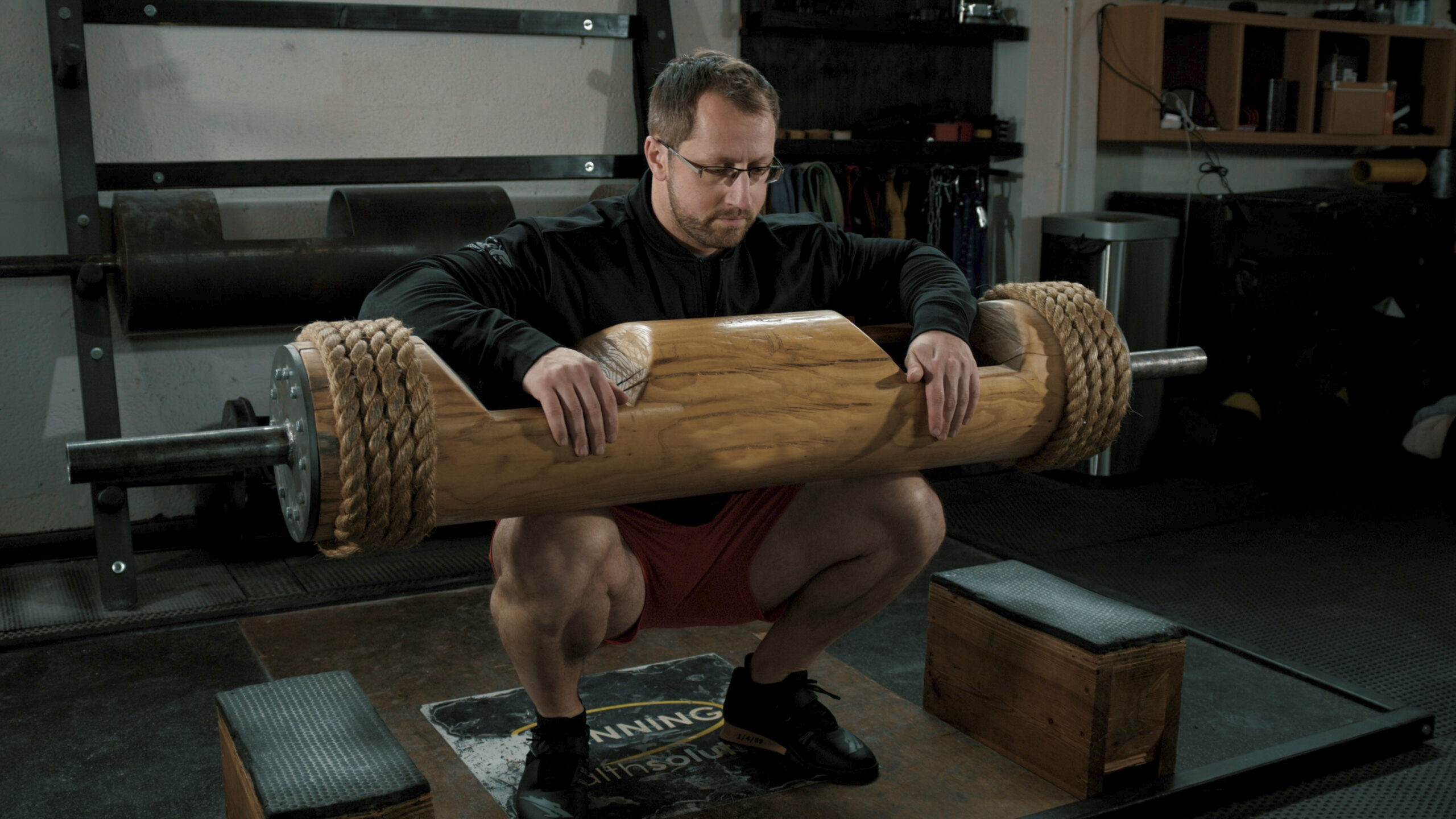
Strong form is essential for performing other movements that involve a squat, like Tom’s log squat shown here.
Bottom-up squats
So, when was the last time you started your squats from the bottom? The answer is rarely or never for most people, which is fine, but changing it up can be a good stimulus for improvement.
Also known as dead squats, this variation starts from the bottom up or from a dead stop on safeties. This forces you to overcome inertia without relying on elasticity to get back up like in a regular top-down squat.
Use a 4+ second pause at the bottom for maximum tension and to eliminate any bounce from the movement, and you can perform these with any regular repetition scheme. This combination will mean that each repetition will feel like the first one and provide repeated effort stimulus.
Why it’s effective:
- Develops raw strength
- Reinforces proper bracing
- Exposes technical flaws
The bottom-up squat forces you to double down on your bracing and positioning because if they’re even slightly off, your squat will go nowhere or you can get injured. Think of it as a lift that keeps you honest.
Watch our YouTube video on Hip & Knee Positioning when performing back squats so you can perfect your technique to a T, making your bottom-up squats more effective.
Calf raises
While the calves aren’t recruited massively in a squat, training them will offer you two main benefits, training straight-legged or bent knee to target either the gastrocnemius or the soleus.
Key benefits:
The first benefit is improved ankle mobility, allowing for better knee stability and more efficient squat patterns. Your knee stability is massively affected by a lack of ankle mobility and I’ve seen many athletes improve their squat technique and strength with improved ankle mobility.
The second benefit is enhanced knee compression stability. Stronger calves help create stability in the bottom of your squat by compressing into the hamstrings, providing your knee joint with the necessary stability it needs not to blow apart.
Don’t overlook this small muscle group – training calves can make a big difference in your performance and aren’t just trained for aesthetic purposes.
Ready to improve your squat?
Follow in the footsteps of some of the greatest strength coaches of our time and use accessory exercises as your secret weapon. Break through squat plateaus, address weaknesses and build a stronger, more powerful squat.
Join our free squat workshop on Saturday 25th January 2025. With years of expertise and hands-on guidance from strongman Tom Hibbert, you can take your squat to the next level!
Click here to sign up now!
For more tips & tricks on improving your back squat, check out this video or explore our YouTube Channel to find other exercises!